Michael Jordan's story can also be read through his shoes. Each model developed its own silhouette, technical solution and visual personality to accompany a stage of his career. This selection brings together the classic designs preserved in the site's original archive and orders them as a chronology of Jordan's impact on and off the court.
1984–1998A journey from the first Chicago years to the final great Bulls season.
13 modelosFrom the first Air Jordan through the XIII, with emblematic variants that expanded the line's identity.
Global legacyPerformance, design and street culture brought together in one of sports' most influential signature lines.
A signature line that changed the game
What began as a high-performance shoe became a line with an identity of its own. Air Jordans marked the evolution of NBA footwear: from classic leather and high cuts to more technical materials, translucent soles, reflective tongues and design ideas that still influence the basketball market today.
These images bring together game models, versions remembered for a particular season and colorways that became inseparable from specific moments in Jordan's career. The sequence works at once as a visual archive and as a portrait of an era.
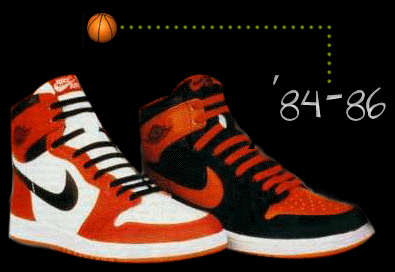
84–86
Air Jordan I
The starting point of the entire line. Its red, black and white combination broke with the more conservative look of the period and immediately fixed an image for Jordan within the NBA. With its high cut, large side Swoosh and Wings mark, the first model still carries the raw energy of the beginning.
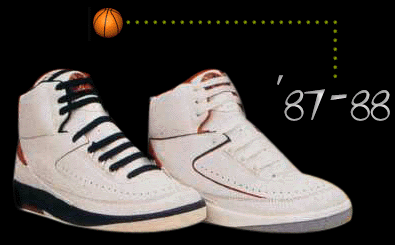
87–88
Air Jordan II
More restrained and refined than its predecessor, this silhouette moved toward an almost luxury profile. The design reduced the prominence of traditional logos and chose cleaner lines with a more elegant construction. The II was the first sign that the series would not repeat itself: every release would have a personality of its own.
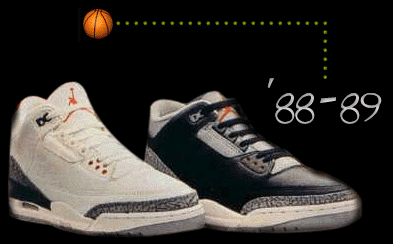
88–89
Air Jordan III
One of the most influential models in the entire saga. Elephant print, a visible Air unit and a more compact silhouette gave it an immediate identity. Here the Air Jordan line finally found a fully recognizable visual language capable of mixing performance, innovation and a strong aesthetic character.
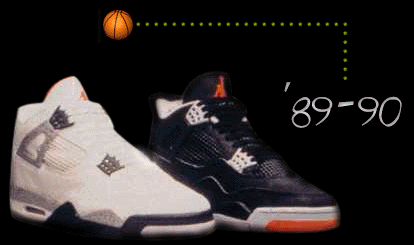
89–90
Air Jordan IV
The IV consolidated the collection's technical turn: mesh panels, plastic wing eyelets and a more aggressive image from every angle. It was designed to respond to Jordan's explosive game, but also to stand out visually in an NBA that was becoming increasingly televised.
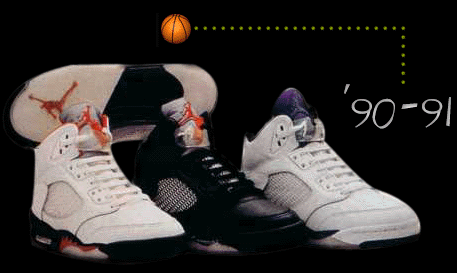
90–91
Air Jordan V
Aeronautical inspiration and the serrated teeth on the midsole gave it a fierce identity. Its reflective tongue and translucent sole made it one of the best-remembered models of the early 1990s. This is the design that accompanies the moment when Jordan begins moving toward total dominance.
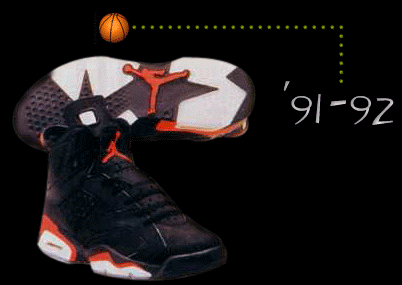
91–92
Air Jordan VI
Sharper and cleaner, the VI combined stability and lightness with a very pure silhouette. The rear pull tab and heel structure gave it a distinctive look while Jordan began linking his footwear permanently with championships. In the imagination of the line, this is a shoe of consecration.
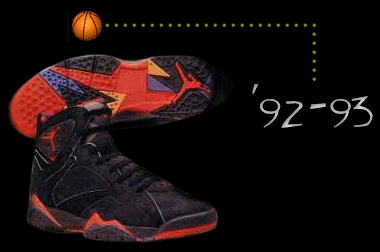
92–93
Air Jordan VII
A more angular shoe, with fewer visible exterior elements and a much more modern presence for its time. The VII left visible air behind and chose a more enveloping construction. The result was a fast, aggressive design closely tied to Jordan's competitive peak in the early 1990s.
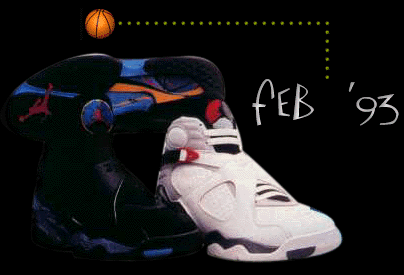
Feb. 93
Air Jordan VIII
The VIII pushed visual force to the limit with crossed straps and a robust volume. It is one of the boldest silhouettes in the classic collection, designed to hold the foot firmly while imposing an unmistakable presence. In the memory of many fans, it represents the end of the first great chapter.
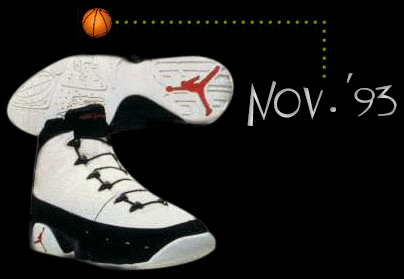
Nov. 93
Air Jordan IX
Released during an unusual period in Jordan's career, the IX adopted a sleeker, quieter aesthetic. The sole included references to the worldwide spread of his image, as if the Jordan name had already stopped belonging only to the NBA and become a global signature. It is a model shaped by absence, but also by the expansion of the myth.
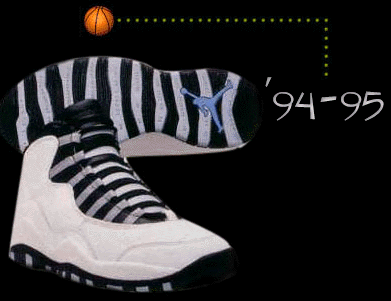
94–95
Air Jordan X
The X is recognizable by its striped sole, listing achievements that had already made Jordan a historic figure even before the final three-peat. Its shape is more contained, almost understated, and fits the context of the comeback. Functionality and the idea of an already established legacy carry equal weight.
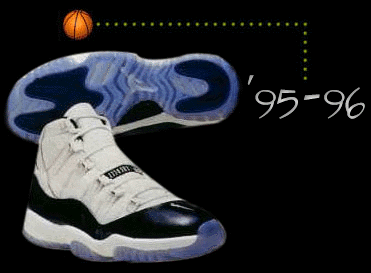
95–96
Air Jordan XI Low
This lower-cut take on the XI keeps the same futuristic feel as the main model, with a clean combination of leather, shine and a translucent sole. Compared with the high cut, it feels lighter, almost summery, without losing the technical elegance that made the XI family one of the most celebrated in the entire line.
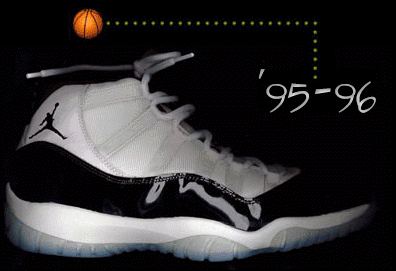
95–96
Air Jordan XI
Patent leather, a streamlined silhouette and an immediately recognizable image: the XI is one of the absolute peaks of the Jordan signature line. Its mix of luxury and performance gave it a presence unlike any other shoe of its era, and its link with Chicago's greatest season made it inseparable from Jordan's biggest mythology.
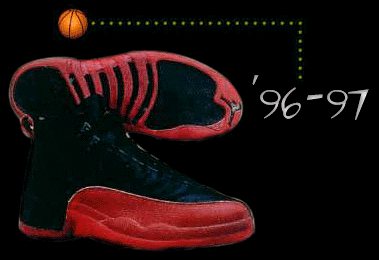
96–97
Air Jordan XII
The XII returned to a more solid, compact feel. The rising lines of the upper and the combination of smooth leather with stronger textures gave it an almost ceremonial appearance while still meeting Jordan's competitive demands in the dynasty's final stretch. It is a severe, elegant and very physical design.
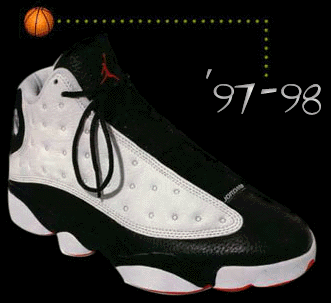
97–98
Air Jordan XIII
With its feline inspiration, side hologram and segmented sole, the XIII offered one of the most sophisticated silhouettes from the closing chapter of the champion Bulls. It has something of contained speed and something of stage presence, as if one object could summarize the intensity, control and precision Jordan brought to Chicago's final great chapter.
More than a collection
The Air Jordan line did more than accompany memorable seasons: it helped redefine what a signature shoe could mean in professional sports. From the court to the street, from performance to popular culture, these models built an iconography of their own. Looking at each pair in sequence is also a way of tracing how Michael Jordan left his mark on the NBA, design and the visual memory of basketball.